
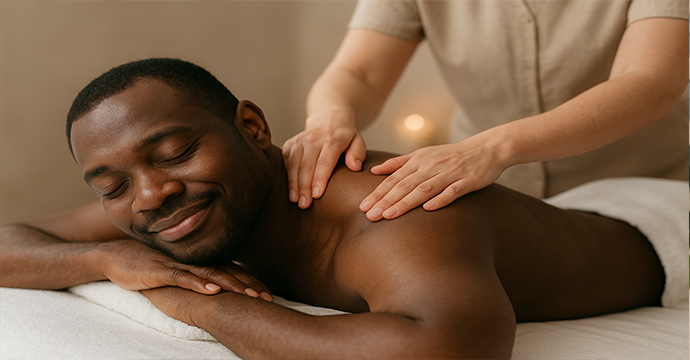
Thai Massage Explained: What It Feels Like, Benefits, and Safety Tips
After a long desk day, it’s normal to notice stiff shoulders, a tight lower back, or legs that feel heavy after the gym. When stretching on your own doesn’t quite do it, Thai Massage can feel like the reset your body’s been asking for.
Unlike oil-based styles on a table, Thai massage is often done fully clothed on a padded mat. A therapist uses steady pressure along your muscles, then guides you through assisted stretches that look a bit like gentle yoga. In other words, you’re not just lying there, you’re working together, breathing, adjusting, and giving feedback as your body opens up.
That mix of pressure and movement is why many people describe it as deeply relaxing, yet also energizing. Some moments feel calm and meditative, while others feel like a satisfying stretch you couldn’t get on your own. It can be intense at times, but it shouldn’t feel sharp or scary, good sessions stay within your comfort and control.
The best Thai massage feels like strong, skilled help, not something you “push through.”
In this guide, you’ll learn how Thai massage works, what it can help with (like everyday tension and workout soreness), and what a session typically feels like from start to finish. You’ll also get simple safety tips, who should be cautious, and how to choose a therapist who listens and communicates clearly. If you’re comparing styles, it also helps to see how Thai massage fits into broader options like professional massage in Nairobi.
What Thai massage is, and where it comes from
Thai Massage is a traditional bodywork style from Thailand that mixes acupressure, rhythmic movement, and assisted stretching. It can feel relaxing, but it also feels active, like your body is being coached back into easier motion.
A big part of how Thai massage is taught is the idea of sen lines (often shortened to sen). Think of sen like a simple map therapists use, similar to “routes” that connect areas of tension. You do not need to believe in anything mystical to get value from it. In practice, it just means the therapist follows consistent pathways with pressure and stretching, because those routes often match where people hold stress (hips, low back, shoulders, neck).
Modern Thai massage also comes in different “flavors.” Some sessions feel gentle and calming, which is common in spa settings. Others are more focused on specific pain points and mobility, which you often see in therapeutic settings. The core idea stays the same, but the intensity, pacing, and stretch choices can vary a lot by therapist and region.
The big difference: it is not just rubbing muscles
If your picture of massage is oil, long strokes, and hands gliding over skin, Thai Massage will feel different right away. Instead of mostly rubbing, it blends several techniques that work together to change your range of motion and how your body feels in space.
A typical session uses:
- Steady pressure using palms, thumbs, forearms, elbows, and sometimes knees or feet (applied with control, not brute force).
- Rocking and rhythmic compression, which can feel calming and helps your nervous system settle.
- Joint mobilization, meaning small, careful movements at the joints (like the hip, shoulder, or ankle) to help stiffness ease.
- Assisted stretches, where the therapist positions your body and supports you through a stretch you might not reach on your own.
Because of those movements, oil usually is not used. Oil makes skin slippery, and that gets in the way of stable holds and safe stretching. Most Thai massage is done on a padded mat, and you typically wear comfortable, flexible clothes (think yoga pants or loose shorts, plus a T-shirt).
That clothing and no-oil setup changes the whole feel. Instead of a “smooth glide” sensation, you feel firm contact and traction, like your muscles are being lengthened and your joints are being gently reorganized. The pressure can be very focused, but it often feels cleaner and more direct than oil massage because there is less sliding and more sustained contact.
If oil massage feels like warm waves washing over you, Thai massage often feels like a steady stretch and press that resets your posture.
Another key difference is how involved the therapist’s body is. In Thai massage, the therapist often uses their body weight and positioning to create even pressure. That can feel surprisingly precise when done well, because the pressure stays steady and controlled instead of poking or jabbing.
A quick, simple history you can actually remember
Thai Massage did not appear out of nowhere in Thailand. It grew over time, shaped by travel, religion, and local healing traditions. Here’s the version that sticks without turning into a history lecture.
First, many of the ideas behind Thai massage trace back to India, especially old healing systems that included breath, movement, and pressure work. Tradition often links Thai massage to Jivaka Kumar Bhaccha (also spelled Jivaka Komarabhacca), who is described in Buddhist texts as a physician associated with the Buddha. In Thai culture, he is remembered as a symbolic “father doctor” figure connected to compassionate healing.
Next, as Buddhism spread through Southeast Asia, temple communities became a natural place to share and preserve practical knowledge, including herbal remedies, bodywork, and assisted stretching. Over time, Thai practitioners blended these influences with local Thai medicine and hands-on techniques suited to farmers, laborers, and everyday aches.
Then comes the important part about preservation. When the old capital of Ayutthaya was destroyed in 1767, many records and teachings were lost. However, Thai healing knowledge did not vanish. It survived because teachers passed it down orally and because temples kept the tradition alive. In other words, the system endured the way many physical arts endure: through hands-on teaching, repetition, and community memory.
After that, Thai massage became more organized and widely taught, especially in Bangkok at Wat Pho (Wat Phra Chetuphon). Wat Pho is often described as a major center for traditional Thai medicine education. The temple complex is also known for displaying instructional materials, including diagrams that relate to sen lines and bodywork concepts. That public teaching role helped standardize what students learned and helped the practice spread beyond family lineages.
Finally, Thai massage traveled worldwide as Thailand became a major destination for travelers and wellness training. Today, you can find Thai massage in spas, clinics, and training schools across the globe. The core recipe remains pressure plus movement plus stretching, but the “accent” can shift depending on where the therapist learned.
One practical thing to remember: there isn’t just one Thai massage. Northern Thai styles are often described as slower and more rhythmic, while some southern approaches are known for stronger pressure. Even within one city, two therapists can deliver sessions that feel completely different, based on training, body mechanics, and the client’s needs.
Why people call it “assisted yoga” (and what that really means)
Calling Thai Massage “assisted yoga” sounds catchy, but it can also be confusing. It does not mean you show up and start doing yoga poses on command. It means the therapist helps move your body into yoga-like shapes, while you stay relaxed and breathe.
In practice, “assisted yoga” looks like this:
- The therapist supports your limbs and guides you into a stretch, so you do not have to strain.
- You are not expected to be flexible. A good therapist adapts every stretch to your body.
- The stretch should feel strong but safe. You might feel intensity, but you should not feel sharp pain, numbness, or panic.
It also involves timing. Thai stretches often come after some pressure and rocking, so the body feels warmer and more willing. That order matters, because stretching cold, guarded muscles is when people tense up or overdo it.
Here are a few common examples, in plain language, so you can picture it:
1) Hip opener (figure-four style)
You might lie on your back while the therapist bends one knee and gently guides your ankle toward the opposite thigh area. Then they lean in slowly to open the hip. It can feel like the tight “side hip” finally lets go.
2) Spinal twist (supine twist)
While you lie down, the therapist brings one knee across your body and supports your shoulder so your spine rotates in a controlled way. This often feels great for the low back and mid-back, especially if you sit a lot.
3) Shoulder and chest stretch (arm traction and opening)
The therapist may draw your arm back and slightly out, then add gentle traction. This can open the front of the shoulder and chest, which is a common tight area for people on laptops and phones.
Even though those shapes resemble yoga, the experience is different because you are mostly passive. Your job is to breathe, stay honest, and give feedback. A simple “less pressure” or “hold it there” keeps the stretch in the right zone.
This is also where the sen line idea fits in without getting weird. Many Thai therapists choose stretches and pressure points along those traditional pathways. You can think of it like following a road map: they work along a route because it often connects the spot that hurts to the spot that is actually tight. That is why you might feel release in your calf when the therapist works your foot, or why hip work can change how your low back feels.
To keep “assisted yoga” safe, remember this rule: a good Thai massage stretch feels like guided lengthening, not a contest. The best sessions leave you feeling lighter, taller, and easier in your joints, not sore from being pushed too far.
How a Thai massage session works, step by step
A good Thai Massage session has a clear flow, even if it feels organic in the moment. It usually starts with quick check-ins, then moves through steady compression, pressure along common tension routes (often legs, hips, back, shoulders), and finishes with slower stretches and grounding work.
If you like knowing what’s coming next, this step-by-step view helps. You’ll get the best results when you treat it like a shared effort, you relax, breathe, and speak up so the therapist can match your body instead of forcing a shape.
Before you start: what to wear, what to eat, and what to mention
Plan to arrive a little early. That gives you time to settle your breathing, use the restroom, and mention anything that could affect pressure or stretching. Rushing in with tense shoulders often makes the first part of the session feel sharper than it needs to.
For clothing, think simple and stretchy. Thai Massage involves a lot of bending, traction, and assisted range of motion, so your clothes need to move with you.
Here’s what usually works best:
- Loose, flexible bottoms (yoga pants, leggings, sweatpants, or athletic shorts that do not ride up).
- A soft T-shirt or long-sleeve top that lets your shoulders move easily.
- Avoid stiff jeans, belts, and bulky zippers, because they pinch during twists and hip work.
- Skip strong perfume or heavy body lotion, because close contact and pressure can make scents feel intense.
Food timing matters more than people expect. A Thai massage session often includes belly-down positions and firm work around the hips and rib area. If you eat a heavy meal right before, you may feel uncomfortable or even a bit nauseous.
A simple rule:
- Eat lightly 1 to 2 hours before.
- Keep caffeine moderate, because it can make it harder to soften into stretches.
- Drink some water, but do not chug right before you start.
Next comes the most important part, what to tell your therapist. Speak up early, because good bodywork is built on good info. Mention:
- Injuries (sprains, strains, disc issues, chronic pain spots).
- Recent surgery (even if it feels “healed,” scar tissue and range of motion can change).
- Pregnancy (this affects positioning and which pressure points to avoid).
- High blood pressure concerns or dizziness history.
- Severe pain, numbness, tingling, or weakness anywhere.
Also share the practical stuff that affects comfort:
- If you sit all day and your hips feel locked.
- If your neck gets headaches with certain angles.
- If your hamstrings cramp when stretched.
Before hands-on work begins, many therapists do a quick visual and movement check. They might ask you to lie down and relax, then see how your shoulders rest, how your ankles move, or where you feel tight. That’s not a test. It’s just a map.
Your best tool in Thai Massage is feedback. If pressure or range feels off, say it early, then you can relax instead of bracing.
If you’re booking in Nairobi and comparing options, it helps to review the service style you want ahead of time, for example a more relaxing approach versus a stretch-focused session. You can also see how Thai Massage fits within other choices like professional massage in Nairobi.
During the massage: pressure points, stretching, and steady pacing
Most Thai Massage sessions happen on a padded mat, and you stay fully clothed. The session often moves through positions in a calm sequence: face up, face down, side-lying, and sometimes seated for shoulders and neck. That variety is one reason Thai Massage can feel “full-body” even when the therapist spends extra time on just a few tight zones.
Once you’re settled, the work usually follows a steady rhythm. Instead of fast rubbing, the therapist uses a pattern that feels more like a slow tide coming in and out:
Press, hold, release, then stretch.
That pace helps your nervous system stop guarding. It also gives tissues time to soften, which makes stretching safer and more effective.
You’ll notice the therapist uses different parts of their body, and it should feel controlled, not aggressive. Each “tool” has a purpose:
- Palms spread pressure over a wider area, great for warming up legs and back.
- Thumbs give more focused contact, often used for points that feel like tight cords.
- Forearms create firm, even compression without poking, especially on thighs and calves.
- Elbows may show up for stubborn knots, usually with very careful body weight control.
- Knees can apply broad, stable pressure on large muscles (like glutes or hamstrings), often gentler than people expect.
- Feet are sometimes used for strong, grounded compression, but skilled therapists keep it slow and steady.
If any of that sounds intimidating, think of it like cooking with different utensils. A spoon, a spatula, and a rolling pin can all be used gently or roughly. In Thai Massage, technique matters more than the body part used. You should feel steadiness, not jabs.
As the therapist works, certain body areas show up again and again because they drive posture and daily discomfort:
- Feet and calves, because they affect your knees, hips, and low back.
- Front thighs and hip flexors, especially if you sit a lot.
- Glutes and outer hips, common tight spots for runners and gym days.
- Mid-back and shoulders, where desk tension stacks up.
- Neck and jaw area, often approached carefully and last, when the rest of you is calm.
Stretching usually builds gradually. First comes compression and rocking to warm the area. Then the therapist guides a limb into a stretch, supports the joint, and waits for your breath to slow. If you fight the stretch, it feels sharp. If you breathe and let the muscle lengthen, it often turns into that “finally” feeling.
Breathing is not just calming advice here, it changes the session. Try this during a stretch:
- Inhale through your nose as the therapist sets the position.
- Exhale slowly as they add a little more range.
- Keep your jaw unclenched, because jaw tension often mirrors hip and shoulder tension.
Most sessions run 60 to 90 minutes (some go longer). In that window, pacing matters more than intensity. The best therapists don’t sprint to deep stretches. They build trust with rhythm, then go deeper only where your body agrees.
What it should feel like (and red flags that mean “stop”)
Thai Massage often includes strong sensations, and that can be confusing at first. You might feel deep pressure, a stretching pull, or an ache that feels similar to a hard but satisfying workout. The goal is not pain. The goal is release, warmth, and easier movement afterward.
A simple rule that works well is a 0 to 10 scale:
- 0 to 2: Very mild, relaxing, you could fall asleep.
- 3 to 5: Good discomfort, you feel it clearly, but you can breathe and stay relaxed.
- 6 to 7: Intense, you may tense up, you should ask for less or adjust the stretch.
- 8 to 10: Too much, stop immediately.
Aim for that 3 to 5 zone most of the time. Some moments may spike higher, especially on tight hips or calves, but you should always feel in control.
Good signs you’re in the right zone:
- The sensation feels like pressure plus relief, not pressure plus panic.
- You can keep breathing without holding your breath.
- After a hold, the area feels warmer or looser.
- Your mind feels calmer, not more alert and defensive.
Now for the red flags. These are not “tough it out” moments. They are stop-and-adjust moments. Tell the therapist right away if you feel:
- Sharp pain (stabbing or pinching, especially in joints).
- Tingling or numbness in hands, feet, or down a limb.
- Shooting pain that travels, like an electric line.
- Dizziness, nausea, or cold sweats.
- A stretch that feels forced, like your body is being pushed past its limit.
Thai Massage should feel strong and steady. If you feel sharp pain, numbness, or shooting sensations, stop and reset right away.
You don’t need a long explanation to protect your body. Clear, short phrases work best:
- “Less pressure, please.”
- “That’s too much range for my hip.”
- “Hold there, don’t go deeper.”
- “Can we skip that stretch?”
A skilled therapist will adjust fast. They can change the angle, use a broader contact point, shorten the lever (for example bending your knee), or move on. Skipping one stretch does not ruin the session. For many people, it improves it.
First-timer tip: don’t try to “help” by tensing or lifting. Thai Massage works better when your body feels heavy, like warm sand in a bag. Let the therapist do the moving, while you focus on breathing and honest feedback.
Aftercare: how to keep the “loose and light” feeling longer
Right after Thai Massage, many people feel taller, lighter, and oddly calm. It’s a great feeling, but it can fade fast if you jump straight back into stress positions (tight shoes, long drives, heavy lifting). A little aftercare keeps the benefits around longer.
Start with the basics: hydrate. You don’t need to overdo it, just drink water over the next few hours. If you sweat a lot or had deep work, add a pinch of salt to food later so you don’t feel drained.
Gentle movement also helps your body “lock in” the new range. Think of it like setting wet cement. If you move lightly, it sets smoother.
- Take a short walk later the same day.
- Do easy stretches you can control, not deep holds.
- Try a warm shower to keep muscles soft, especially for hips and shoulders.
If you feel tender, adjust your training plans. For the rest of the day, it’s usually smart to avoid heavy workouts if you feel sore or a bit wobbly. You can still move, just keep it light.
Some short-term soreness is normal, especially if you haven’t had Thai Massage in a while. It should feel like post-yoga tenderness, not a new injury. Watch how it behaves:
- Normal: mild soreness that peaks within a day, then fades quickly.
- Not normal: pain that keeps getting worse, swelling, new numbness, or joint pain that feels unstable.
If you want Thai Massage mainly for stress relief, occasional sessions can be enough, especially during busy seasons. On the other hand, if your goal is flexibility and mobility, you’ll usually do better with more regular sessions over time, combined with light stretching between appointments. Consistency beats intensity here.
To make the next session even better, note what worked:
- Which stretches felt amazing.
- Which spots felt too intense.
- Whether you prefer slower pacing or more focused pressure.
That little feedback loop is how Thai Massage turns from “that was interesting” into “my body feels like mine again.”
Real benefits people notice, plus who should be careful
Thai Massage has a reputation for being intense, but the real benefits people talk about are practical. You tend to notice easier movement, less “stuck” feeling in your hips and back, and a calmer mind that still feels awake. It’s not magic, and it won’t “fix” an injury on its own. Still, when the therapist works with your body (not against it), the change can feel obvious the same day.
At the same time, Thai Massage includes stretching, pressure, and joint movement. That means some people should modify the session, or skip it until they get medical advice. Use the sections below as a real-world guide, based on what people commonly feel and when it’s smarter to be cautious.
Flexibility and range of motion: why stretching with support can work
Most people don’t lack flexibility because they’re “bad at stretching.” They lack it because tight areas stay guarded all day. Think hip flexors after hours of sitting, hamstrings after workouts, and upper back stiffness from a laptop hunch. Thai Massage helps because the stretches are supported, slow, and paired with steady pressure first.
Instead of forcing you into a shape, a good therapist uses positioning and body weight to create a stretch that feels stable. That support matters because your nervous system relaxes faster when you feel safe. As a result, you can often access range you can’t reach alone, especially in:
- Hips and glutes, where tension can make walking and squats feel restricted.
- Hamstrings and calves, which often feel like “short ropes” in first-timers.
- Upper back and shoulders, where tightness can limit overhead movement.
- Chest and front shoulders, common tight zones for phone and desk posture.
Still, flexibility gains don’t arrive in one heroic session. Your body changes like a leather belt breaking in, a little at a time. That’s why consistency beats intensity. A moderate stretch repeated over weeks often helps more than one deep session that leaves you sore and defensive.
To get the best mobility results, keep two habits in mind:
- Stay in the “strong but safe” zone (you can breathe and soften).
- Repeat what works, even if it feels basic, because your body trusts repetition.
If you love that “open hips” feeling after Thai Massage, try booking sessions on a steady rhythm rather than waiting until you’re completely locked up.
Stress relief that feels calm, not sleepy
A lot of massages relax you so much you want a nap. Thai Massage often relaxes you, but many people also feel clear afterward. That combo usually comes from three things working together: a meditative pace, steady compression, and breathing that naturally slows down.
The session often feels like someone turning the volume down on your nervous system. Pressure is applied, held, and released with rhythm. Meanwhile, your body gets guided into stretches that invite a longer exhale. When that happens, you might notice:
- Your mind gets quieter, but you don’t feel foggy.
- Your shoulders drop without you “trying” to relax them.
- Your breathing becomes deeper, even between stretches.
People also commonly describe mood support. You may feel lighter, more patient, or less reactive for the rest of the day. Sleep can improve too, not as a promise, but as a common experience. When your body is less wound up at bedtime, it’s often easier to settle.
A good Thai Massage doesn’t knock you out. It gives you enough calm to feel present in your body again.
If you want that calm-with-energy effect, ask for a session with steady pacing and moderate pressure, not a fast, deep “knot hunt.” The slow rhythm is a big part of why it works.
Soreness, stiffness, and muscle knots: what Thai massage can and cannot do
Thai Massage can feel amazing for tight muscles and stubborn “knots,” but it helps to know what that means. In most cases, the “knot” feeling is a mix of tight muscle fibers, sensitive trigger points, and protective tension from how you move every day. Compression and stretching can reduce that tightness and help you feel looser.
However, Thai Massage is not the same thing as treating an injury. If you have a tear, a fresh sprain, nerve symptoms, or serious joint pain, deep stretching won’t repair tissue. In those cases, the smart move is to get medical advice first and use massage only when it’s appropriate.
So what can Thai Massage do for soreness and stiffness?
It often helps with the “everyday tight” category, such as:
- Post-workout heaviness in legs and hips.
- Desk stiffness in upper back, neck, and shoulders.
- General body tension that makes you feel restricted.
What it usually cannot do on its own:
- Heal structural injuries (tears, fractures, acute disc problems).
- Replace rehab exercises or medical care.
- Make sharp joint pain “go away” safely through force.
Also, don’t panic if you feel mild soreness the next day. That happens, especially if you’re new, very tight, dehydrated, or you went too deep too fast. It’s similar to how you feel after a strong yoga class. The key is how it behaves.
Normal next-day feelings often include tenderness when you press an area, or mild stiffness that improves with a warm shower and light movement. On the other hand, not-normal signs include sharp pain, swelling, new tingling, numbness, or weakness. If those show up, treat it seriously and get checked.
To reduce next-day soreness, keep it simple: drink water, take an easy walk, and avoid heavy lifting right after a strong session.
Safety checklist: when to skip Thai massage or get advice first
Because Thai Massage involves stretching and body positioning, safety matters more than with some other styles. When in doubt, choose a gentler session, shorten the time, or pause until you get clearance. You don’t lose progress by being cautious, you protect it.
Here are the common situations where it’s better to skip Thai Massage or get medical advice first:
- Pregnancy: Avoid standard Thai Massage. Prenatal work needs special training and safe positioning (usually side-lying). Many sources also advise extra caution in the first trimester and in higher-risk pregnancies.
- Recent surgery: Healing tissue, scar sensitivity, and movement limits change what’s safe. Get clearance, then ask for a gentle, modified approach.
- Fractures or recent sprains/tears: Thai stretching can stress healing tissue. Wait until a clinician says it’s ready.
- Severe osteoporosis or fragile bones: Deep pressure and strong stretching can raise risk. A lighter style may be safer, but get guidance first.
- Blood clot risk or clotting disorders: Deep compression on limbs can be risky. If you have a history of clots, get medical advice before booking.
- Uncontrolled high blood pressure: Strong work can feel overwhelming, and dizziness risk matters. Stabilize first, then choose gentle pressure.
- Certain spine issues (for example, severe disc symptoms, instability, or nerve pain down the leg or arm): Twists and traction can irritate symptoms. Get assessed before you stretch through it.
- Acute inflammation: If an area is hot, swollen, sharply painful, or recently injured, skip deep work there.
Even if none of these apply, your safety still depends on two things: your therapist’s skill and your honesty in the moment. Before the session, share your health history and mobility limits. During the session, speak up early with clear feedback like “less pressure” or “don’t go deeper.”
A few simple boundaries keep Thai Massage both effective and safe:
- Sharp pain is a stop sign, not a challenge.
- Numbness or tingling means adjust immediately.
- Joint pain needs caution, even if you can “tolerate” it.
When Thai Massage stays within your real limits, it can feel like your body got a smart reset, not a rough workout you have to recover from.
Thai massage vs Swedish, deep tissue, and sports massage: choosing what fits today
If you love Thai Massage, you already know it is not the “melt into the table and forget your name” kind of session. It’s more like a skilled coach helping your body move better. Still, when you’re booking on a spa menu, you often have to choose between Swedish, deep tissue, and sports massage, even when what you really want is stretching, pressure, and mobility work.
A simple way to pick is to match the style to your goal for today:
- Relaxation and calm: Swedish usually feels easiest.
- Pain spots and stubborn knots: deep tissue often fits best.
- Training soreness and performance support: sports massage tends to win.
- Flexibility and mobility: Thai Massage is hard to beat.
To make it even clearer, here’s a quick decision guide you can scan in seconds.
| Your goal today | Best match | What it tends to feel like | Best if you prefer |
|---|---|---|---|
| Switch off stress, sleep better | Swedish | Warm, flowing, soothing | Oil, gentle touch, quiet pace |
| Work on a specific knot (neck, low back, shoulders) | Deep tissue | Slow, focused pressure, sometimes intense | Oil, table work, staying in one area |
| Recover from training, reduce tightness in “sport muscles” | Sports | Targeted, practical, sometimes brisk | A plan for hips, calves, hamstrings, shoulders |
| Improve range of motion, open hips, feel “reset” | Thai Massage | Assisted stretching plus steady pressure | Clothed work, mat or firm surface, guided movement |
The key is expectation. A “strong massage” is not always deep tissue, and a “sports massage” can be relaxing if it’s paced well. You can also mix goals, but tell your therapist what matters most so they don’t guess.
If you want deep stretching, Thai massage usually wins
Thai Massage shines when your body feels short, stiff, or stuck. If you sit a lot, your hip flexors and chest can tighten like a pulled drawstring. Thai work helps by combining steady compression with assisted stretches, so your body warms up before it lengthens.
People who often get the best results include:
- Desk workers who feel locked hips, rounded shoulders, or a cranky low back.
- Runners and gym-goers with tight hips, glutes, calves, or hamstrings.
- Anyone chasing mobility more than “spa relaxation.”
- People who like being guided, because you don’t have to figure out the stretch yourself.
Another perk is the full-body connection. A skilled Thai therapist might work your feet and calves, then your hips feel freer. That can seem surprising, but it often makes sense in your body.
At the same time, Thai Massage can feel intense if you’re very tight or anxious about stretching. The intensity usually comes from long holds and big range, not from fast pressure. Communication keeps it safe and enjoyable. Use plain language in the moment, such as “less stretch,” “hold there,” or “that’s my limit.”
The best Thai Massage feels like guided opening, not a flexibility test.
If you tend to brace or “help” during stretches, let your body get heavy instead. When you soften, the stretch usually feels cleaner and less sharp.
If you want pure relaxation with oil, Swedish may feel better
Swedish massage is the classic choice when you want your mind to slow down and your body to feel cared for. It’s known for long, flowing strokes, gentle kneading, and a steady pace that feels safe for most people. Oil or lotion helps the hands glide, so you get that smooth, continuous sensation, like warm waves moving from head to toe.
It’s also a great first massage because it rarely surprises you. You lie on a table, you breathe, and the therapist works across big areas without forcing range of motion. If you’ve had a stressful week, slept poorly, or feel emotionally worn out, Swedish can feel like turning the volume down on everything.
Here’s the main contrast with Thai Massage: Swedish is mostly passive and surface-to-mid level muscle work, while Thai is more active and movement-based. Thai sessions often include pressure holds and assisted stretching, so you might feel “worked” in a different way. Swedish, on the other hand, usually aims for comfort first, then deeper work only if you ask for it.
Swedish can still help with everyday tightness, especially if your tension is stress-driven. However, if your main issue is limited range of motion (tight hips, stiff upper back), Swedish may feel nice but not “unlock” you the way Thai stretching can.
A good rule: choose Swedish when you want to relax without effort, and choose Thai when you want to relax while your body changes position and opens up.
If you want focused knot work, deep tissue can be the better match
Deep tissue massage is for the days when you can point to the problem. Maybe it’s that ropey band in your shoulder, the stubborn spot near your shoulder blade, or the low back tightness that keeps coming back. Deep tissue targets deeper muscle layers and connective tissue, and it often moves slower than Swedish.
Instead of broad, flowing strokes, deep tissue usually uses:
- Slow pressure that sinks in over time.
- Focused work in a smaller area.
- Friction across muscle fibers (which can feel intense, even if it’s controlled).
Most deep tissue sessions happen on a table with oil or lotion, because the therapist often needs glide and grip changes as they work through layers. You may also feel soreness later, especially if the work was very focused or you came in already irritated.
This is where people get confused: a “strong Thai Massage” and deep tissue can both feel intense, but they are intense in different ways.
- Thai Massage intensity often comes from stretch depth, pressure holds, and body positioning.
- Deep tissue intensity often comes from slow, concentrated pressure aimed at a specific knot or chronic tension pattern.
So if you love Thai but you’re chasing a single stubborn knot, deep tissue can be a better match. On the other hand, if your whole body feels compressed and your hips feel tight, Thai often makes more sense than spending 60 minutes hunting one spot.
If you’re unsure, ask yourself: do you want to feel longer and looser, or do you want to feel like someone finally worked out that one problem area? Your answer points to the right style.
How to book smart when a menu does not say “Thai massage”
Some spas don’t list Thai Massage at all, even if they have therapists who can do stretching-focused work. Others offer a blend, for example “sports” with stretching, or deep tissue with compressions. The trick is to describe the feel you want, not just the name.
Use simple scripts like these when you call or message:
- For Thai-style stretching: “I want a stretching-focused massage with assisted mobility, especially hips and hamstrings. Do you have a therapist who does that?”
- For acupressure-style pressure: “I like firm, steady pressure holds, more like acupressure than rubbing with oil. Is that available?”
- For a Thai-like sports session: “Can I book sports massage with a lot of stretching and hip work? I don’t need full relaxation.”
- If you want clothed work: “I prefer to stay clothed, with compression and stretching. Do you offer mat work or Thai-style sessions?”
If they offer only table massage, you can still get a similar intensity, but it won’t be identical. Thai-style floor stretching is a specific setup, and it changes how the therapist uses body weight and angles. Table work can include stretching, but it often feels more limited and more localized.
Also clarify two details that affect everything:
- Oil vs no oil: If you want Thai-like holds, say you prefer minimal oil (or ask what their sports massage uses).
- Stretch comfort: Tell them your level, for example “I’m tight, go slow,” or “I stretch often, you can take me deeper.”
Finally, give one clear priority so the therapist doesn’t mix styles in a way you don’t like. For example: “My top goal is hip mobility,” or “My top goal is calm relaxation.” That one sentence often decides whether you walk out feeling reset or just rubbed down.
Conclusion
Thai Massage works because it blends steady pressure with assisted stretching, so your body doesn’t just relax, it starts to move better. As a result, many people walk out feeling more open in the hips, lighter through the back, and less “stuck” in the shoulders. It’s also why the best sessions feel calm but energizing, not sleepy.
Still, results depend on two things: your feedback and your therapist’s skill. Start gentle if you’re new or very tight, then build intensity over time. Most importantly, speak up early about pressure, stretch range, and any injuries, because comfort and control keep Thai Massage both safe and effective.
Thanks for reading, and if you want to get the most from your next session, decide your main goal first (relaxation, flexibility, or recovery), then book the style that matches it.